Why the shovel comes last
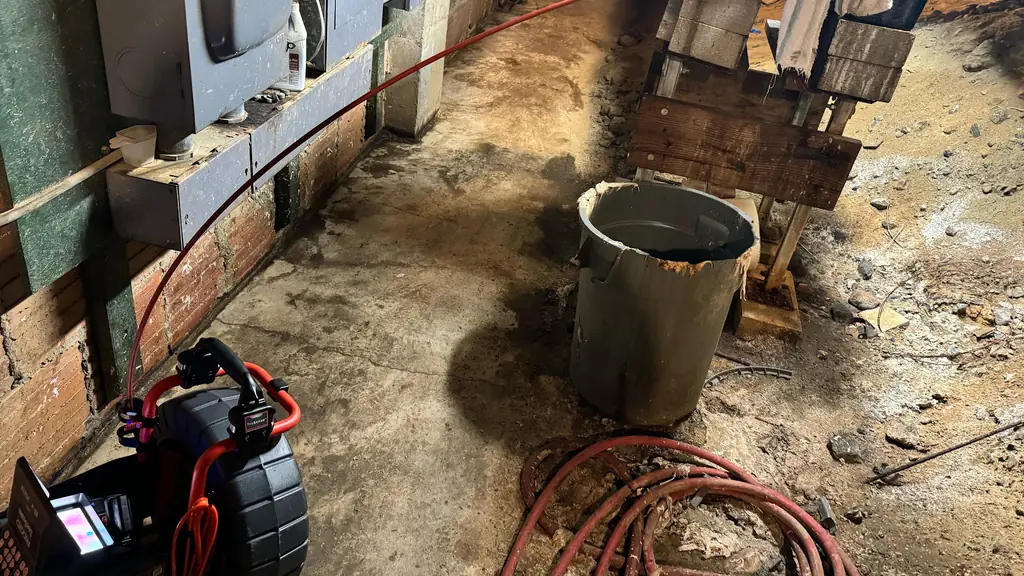
Without a picture of the inside of the line, a repair starts as a guess: dig here, maybe it's the joint, maybe it's the whole run. An exploratory trench through a yard or a basement floor can cost more than the repair it was meant to locate. A camera inspection avoids exploratory excavation by showing you the pipe from the inside first.
It matters most in an older house. People buying one often learn that the sewer line is cast iron of an unknown age with a history nobody can recite. A look down the line before closing gives you something better than the seller's word, and it tells you whether the pipe is a candidate for lining instead of replacement.
Backups, slow drains, gurgling and a change in the water level in the toilet are all reasons to look rather than guess. Drains By James has been doing this out of Wilmington since 2007, for homes and businesses across Eastern Massachusetts, Boston and the North Shore.
What goes down the line with the camera
Camera inspections of sewer lines and many other types of drains include locating and a USB copy of the footage. Locating means the crew can mark on the surface where the problem sits, so any later work starts at a spot instead of a hunch. The USB copy is yours to keep, show a plumber, or hand to a buyer or an insurer.
The technician discusses and explains the results with you. One customer wrote that the technician "explained exactly where the clog was, why it happened," and that is the point of the visit: you leave knowing what the pipe looks like, not just that something is wrong.
A video inspection is published at $489, with a 2 hour minimum and $300 per hour after that. Weekday evenings add a published surcharge of $110 to $160, weekend mornings add $125, and true emergencies are priced by phone. The camera is available 24/7 for emergencies.
A look at one moment, not a warranty on the future
Video inspections are a "point-in-time" look at your pipes. They do not guarantee that future clogs or issues won't occur. The company says that up front, and it is worth hearing before you pay for any camera visit from anyone.
Used well, the footage is a baseline: a record of the pipe's condition on the day, kept on a USB drive. If the line is cast iron and sound, lining may follow, since just about any pipe is typically restorable. If it is not, the footage shows why, and what the repair has to cover.
New customers get $500 off any pipe lining repair. The shop is open 24 hours, 7 days, and the number is 781-933-4304.