Hydro Jetting or a Drain Snake: Which One Does Your Line Need?
Both tools clear drains, but they solve different problems and they aren't interchangeable.
October 20, 2026 · 4 min read
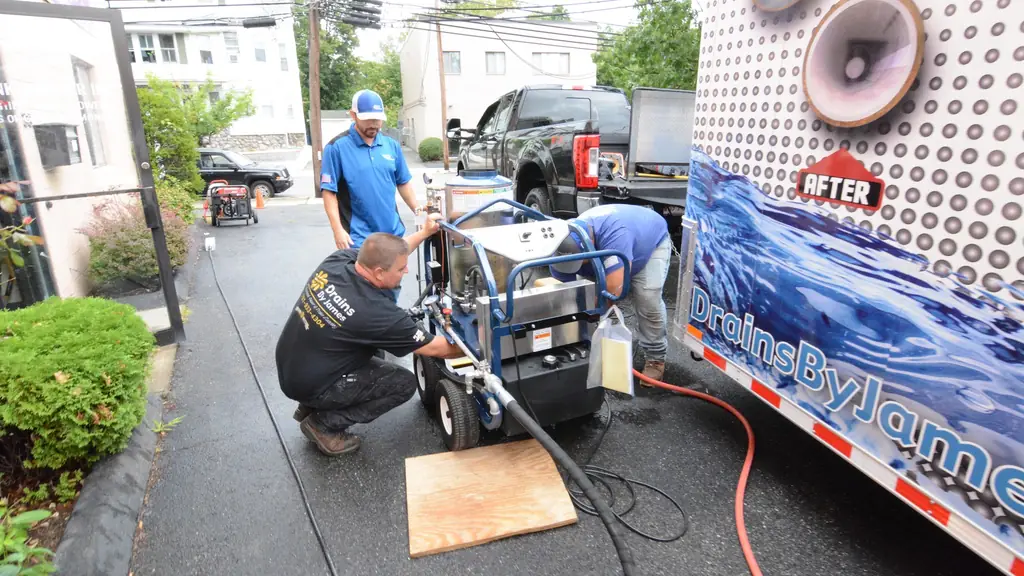
When a drain backs up, two tools come up in nearly every conversation: the snake and the hydro jet. People sometimes treat them as a cheap option and a premium option for the same job. They aren't. They do different work, and choosing the wrong one costs you either money or time.
Here's how each one works, what it's good at, and how to tell which your line needs.
How a drain snake works
A drain snake, or auger, is a coiled steel cable with a cutting or hooking head, driven by a motor or turned by hand. The technician feeds it into the pipe until it meets the blockage, then spins the head to break the clog apart or pull it back out. The water starts moving again.
For a single blockage, it's the right tool. Think of a mass of hair in a tub, a toilet that won't clear, a sink choked with food debris. The clog is the whole problem, so removing the clog solves it. Drains By James lists a snaked toilet at $289 and any inside drain 2 inches or less at $289, so the work is straightforward and priced up front.
The limit is the pipe wall. A snake bores a channel through the middle of whatever is in there. It doesn't clean what's stuck to the sides.
How hydro jetting works
Hydro jetting uses a hose with a nozzle that fires high-pressure water in several directions at once. As the nozzle moves down the line, the water scours the inside wall, breaking up grease and scale and cutting through roots, then flushing the debris out. Instead of punching a hole through the clog, it cleans the pipe back toward its full diameter.
Drains By James describes high-pressure water jetting as the answer to roots, pipe scale and stubborn debris, and as the next step when snaking fails. That tracks with how the tools behave: where a snake leaves the lining of the pipe untouched, a jet strips it.
Matching the tool to the problem
- One slow sink, tub or toilet with no history of trouble: a snake is usually the right starting point.
- A clog that returns within weeks or months: the walls probably need cleaning, which points to jetting.
- Roots in a main line: jetting, because a snake can nick roots without clearing them from the walls.
- Heavy scale in an old cast iron or galvanized pipe: jetting, sometimes paired with a descaling tool.
- Grease buildup in a kitchen line or a restaurant drain: jetting.
If you're not sure which category you're in, a camera settles it. Seeing the pipe interior tells the technician whether a clog is an isolated event or the visible tip of a long buildup.
Jetting as prep for trenchless repair
Hydro jetting has a second job. Before a liner goes into an old pipe, the pipe has to be clean, because the resin needs a solid surface to bond to. In the pipe lining process Drains By James describes, jetting is the prep step between the camera inspection and the liner. So a hydro jet isn't only a cleaning tool. It can be the first stage of a lasting repair.
On the price list, the line item for a high pressure waterjet with Picote and video is $1,980. Picote is a milling tool that grinds away hard deposits and intruding roots, and the video lets everyone see the result. For a main sewer line cleaning up to 100 feet, the published price is $489.
When not to jet
Water under pressure is powerful, and it's not right for every pipe. Drains By James says it directly: jetting is safe for most pipes, but they're not responsible for the failure of pipes that are already broken, paper-thin due to rust, or improperly installed. A pipe in that condition can give way under pressure it would never meet in normal use.
This is another argument for looking before you act. If a camera shows a wall that's gone thin, the better plan may be a patch or a liner, not a jet. A good technician will tell you so, even when it means a different job than the one you called about.
A simple way to decide
Ask yourself two questions. Is this the first time this drain has clogged? And is the pipe in decent shape? If the answers are yes and yes, start with a snake. If the drain keeps clogging, or the line is old, or you've got roots nearby, plan on a camera and a jet.
You'll also want to think about the cost of repeating the cheaper fix. A snake on a pipe that needed jetting is a recurring bill. Jetting a pipe that only needed a snake costs more than necessary. The honest answer comes from a technician who can explain why the clog happened, not just that it did.
Drains By James has handled residential, commercial and outdoor drains since 2007, using its own technicians with no subcontractors. They're open 24 hours and can be reached at 781-933-4304.
Drains By James Inc., 781-933-4304
Call 781-933-4304More articles
Why the Same Drain Keeps Clogging, and What Actually Stops It
A repeat clog usually means the cause is still sitting in the pipe, so the fix has to reach it.
What a Sewer Camera Inspection Shows Before You Buy an Older House
The pipe under the lawn is the one part of an old house nobody can see, until a camera goes in.